26.38
Release 26.38: Charts in Search
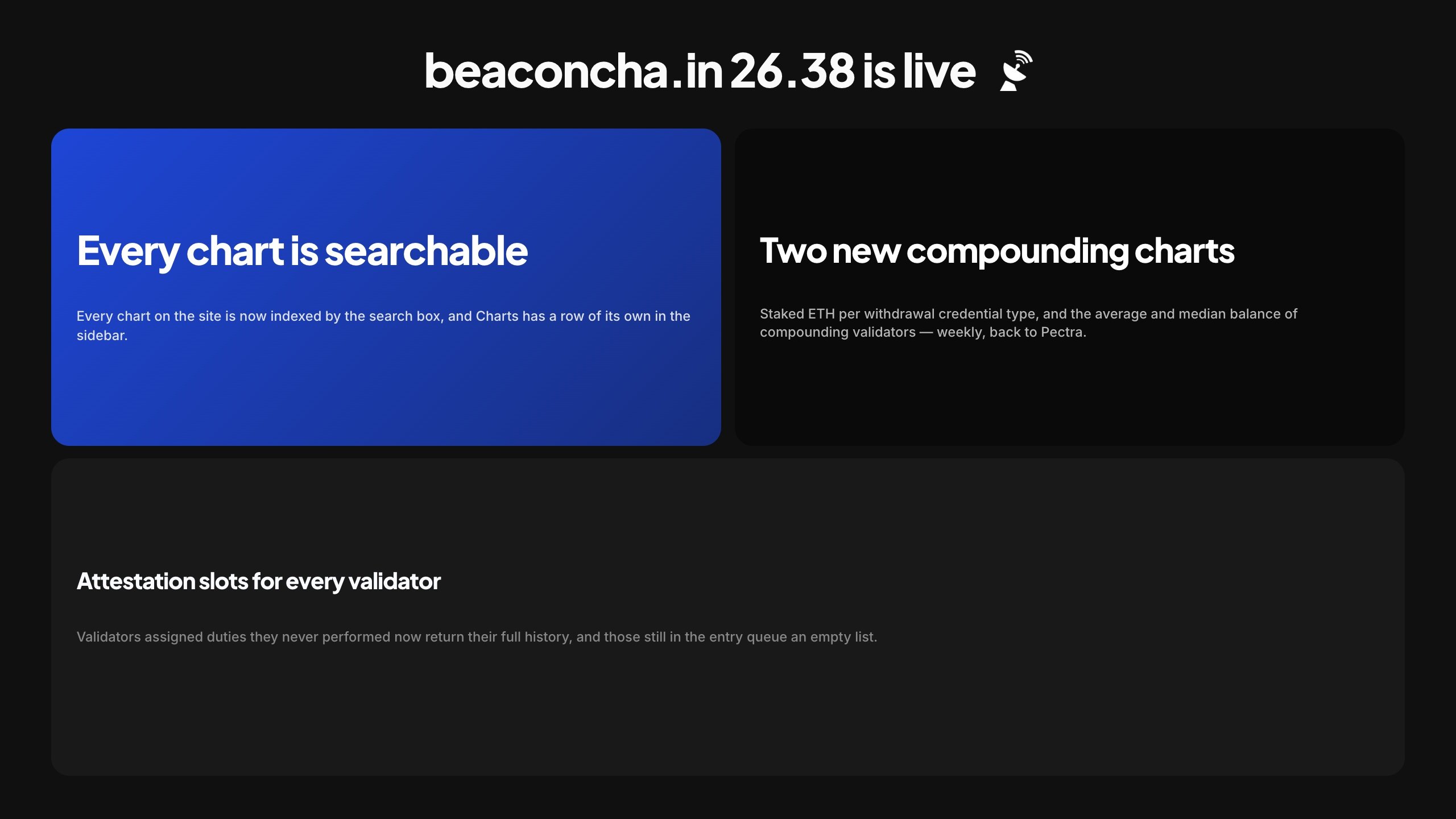
- Charts in search — Every chart on charts is now searchable by name, and Charts has its own sidebar row.
- Two compounding charts — Staked ETH per withdrawal credential type, plus compounding validators’ average and median balance, weekly since Pectra, on consolidations.
- Attestation slots without attestations — Attestation slots now returns assignment history for validators that never attested, and an empty list for queued ones.
- ETH.STORE® exclusions documented — ETH.STORE® now states that validators whose effective balance changed during the day are excluded, and why.
- API key allowance corrected — The API docs now match pricing: Hobbyist 2, Business 5, Scale 10, custom on Enterprise.
26.37
Release 26.37: Custom Time Ranges for APY & ROI
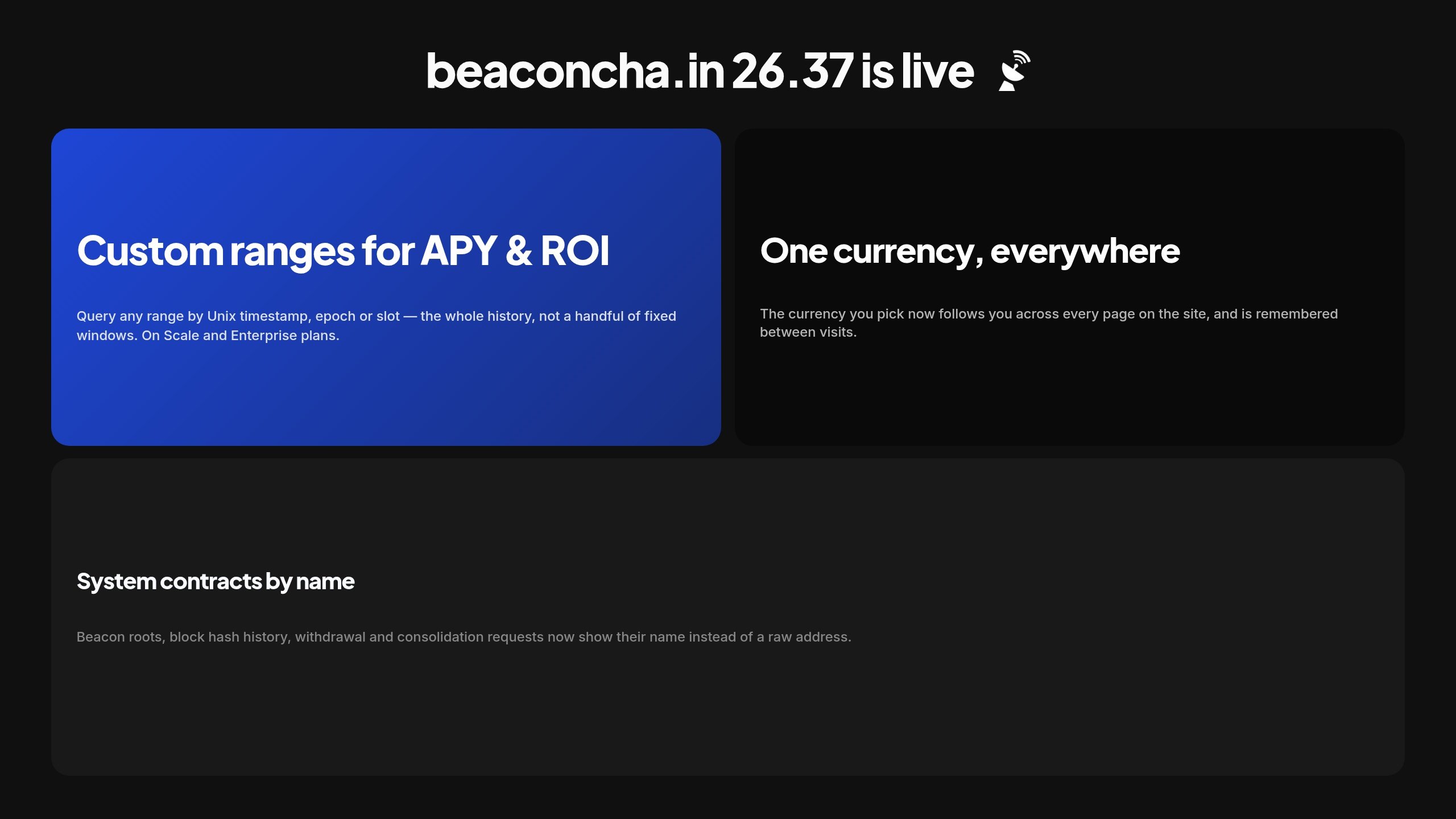
- Custom time ranges for APY and ROI — The APY & ROI endpoint only accepted one of a few named windows. It now takes any range you ask for, by Unix timestamp, epoch or slot, on Scale and Enterprise plans — the same custom ranges the network performance, validator performance and validator rewards endpoints already accept. Custom ranges are served at whole-UTC-day granularity, and the response reports the range it actually covered.
- Your display currency now follows you across the whole site — The currency you pick in the top bar used to apply only to the part of the site you picked it on: the newer pages and the classic explorer each remembered their own choice, so the same balance could read in dollars on one page and in euros on the next. There is now one selection for the whole site, and it is remembered between visits on every page.
- Ethereum’s system contracts are shown by name — The beacon roots, block hash history, withdrawal request, consolidation request and CREATE2 factory contracts appeared as raw addresses everywhere they turned up. They are now labelled by name on the address page and on the transactions that call them.
- The logo takes you home again — In the new sidebar the logo led back out to the marketing page, which is the one thing a logo is not expected to do. It now takes you to your home page, and the marketing page has a Products row of its own in the sidebar. The cards and charts on the home page also got a layout pass for narrow screens.
- Searching for a number finds the validator first — A number can be a block, an epoch, a slot or a validator index all at once, and the search results did not lead with the validator. On a validator explorer that is almost always the one you mean, so validator results now come first.
- Block pages load again — Opening a block from the blocks list briefly returned an error page instead of the block’s details, for every block produced since the Merge. Pre-Merge blocks and the matching slot pages were never affected. They all load again.
26.36
Release 26.36: The New Sidebar
- A sidebar that follows you across the whole site — The product navigation moves from the top of the page into a sidebar on the left, with the full site map grouped into sections that open and close. The pages you star, the ones you visited recently, which sections you left open, whether the sidebar is expanded or collapsed to icons and your theme follow you across every page on the site. It collapses to a narrow icon rail on smaller screens and expands on wide ones, and you can override that yourself — your choice is remembered. On a phone or tablet it becomes a drawer behind the menu button. Above it a bar carries the current slot, epoch, finality, gas price and ETH price, the currency switch, and a star to add the page you are reading to your favourites. Your dashboards are listed by name, and the account menu now shows your full email address, your plan per product, and new Send feedback and Report a bug entries.
- A home page of your own — Signed in, beaconcha.in now takes you to your home page instead of the marketing page. It greets you, puts a search field front and centre, and leads with your dashboard: how many of your validators are online, your BeaconScore® over the last day, your rewards and APR over the last 30 days, each with a small chart over exactly that period. Narrow the whole card to a single validator group, or switch to another of your dashboards, and every figure follows. Below that: your latest notification, a strip of network figures, the validator queue and current wait time, the recent epochs and slots tables, and the top staking operators. Signed out, the marketing page is unchanged.
- Chart how the staking queues change over time — The new staking queues history endpoint returns the deposit, exit, manual withdrawal and consolidation queue sizes as a time series, so you can chart how much ETH is waiting to enter and leave staking rather than only reading today’s figure. Ask for a range by timestamp, epoch or slot, daily or per epoch, or leave the range out for the last 30 days. Daily figures reach back to the Pectra fork; per-epoch figures reach back as far as the records can be trusted, and a request for anything earlier is answered from that point rather than with gaps.
- Turn product emails on and off — A new “Product News & Offers” switch on the Account tab of your settings controls whether you receive product news, and takes effect immediately. Every such email also carries a working unsubscribe link, including the one-click kind your mail app offers at the top of the message. Until now consent was only recorded when you registered, with no way to change your mind.
- A realistic wait for a switch to compounding — The queue position and estimated wait shown for a switch to compounding withdrawal credentials were counted only among your own requests, not among everyone’s, so the estimate said the switch was seconds away no matter how long the real queue was. Both are now counted against the whole queue, and the figures shown for your validator and for the network as a whole agree with each other. Requests submitted through a contract rather than directly are no longer left out.
- Searching for a block’s graffiti no longer times out — Searching for the text a validator writes into the blocks it proposes could hang for over a minute and end on an error page instead of a result, and a common value such as “Lido” did so every time. Those searches now answer in well under a second.
26.35
Release 26.35: Block Space by Relay
- Which relays deliver each operator’s blocks — Entities and each entity’s sub-entities table gain a Block Space column: a stacked bar of the MEV-Boost relays that delivered that operator’s blocks over the selected period, with blocks built without a relay as a gray remainder and the MEV-Boost share below it. Hover the bar for the split per relay. The column also sorts on the Entities table, so an ascending sort brings up the operators that propose most of their blocks without a relay — usually a sign that a relay, or the monitoring of it, is misconfigured.
- Tooltips with more than one figure are now readable — Tooltips that carry several figures, on charts and in tables across the site, packed them into a single line separated by pipes or line breaks. They now lay the figures out as a small table: a heading, one row per value with the numbers lined up on the right, and the total set apart. Their colours were rebuilt for the dark tooltip background as well, so values that were hard to make out against it now stand out.
- Search results no longer open a new tab — Picking a page from the search dialog opened it in a new browser tab, even when it was a page on beaconcha.in, and the same happened in the header search on explorer pages and in some links in the notification centre. Those now open in the tab you are already in. Only genuinely external links still open a new one — the documentation and Chainabuse.
- Jump around long pages — Long pages now carry a section navigation: a rail beside the content on a wide screen, and a sheet you can open on a phone. It follows along as you scroll, marks the sections currently on your screen, and takes you straight to any of them. You will find it on each validator’s own page (reachable from Validators), on Validator Queues and Withdrawals, and on the home page, the API page and BeaconScore®.
- See when a manual withdrawal request will be paid out — A manual partial withdrawal now shows when it is expected to settle: a countdown on each request already queued, and an estimate of the wait if you were to request one now. Both appear on each validator’s own page, in the table labels and their tooltips.
- Execution payload status on slot pages — After the upcoming Gloas upgrade, a block can be proposed without its execution payload ever being revealed. Slot pages now show that as a status of its own beside the proposal status — full, empty or still pending — and name the reason an empty one is empty: the builder withheld the payload, or the next block was built on an earlier one. The slot endpoint returns the same two fields. Slots from before the upgrade show nothing, since the distinction does not exist for them.
- The mobile app’s status and navigation bars follow your theme again — On Android 16 the bars at the top and bottom of the app stopped picking up the theme and stayed white. They follow it again, including the colour set by the validator you have selected.
- Account sign-in hardened — Several fixes to signing in: a two-factor code can no longer be used a second time, your session is replaced part-way through a two-factor sign-in rather than carried over, and two accounts can no longer be created for the same email address at the same moment. Nothing is needed from you.
26.34
Release 26.34: Entity Search & Explorer Fixes
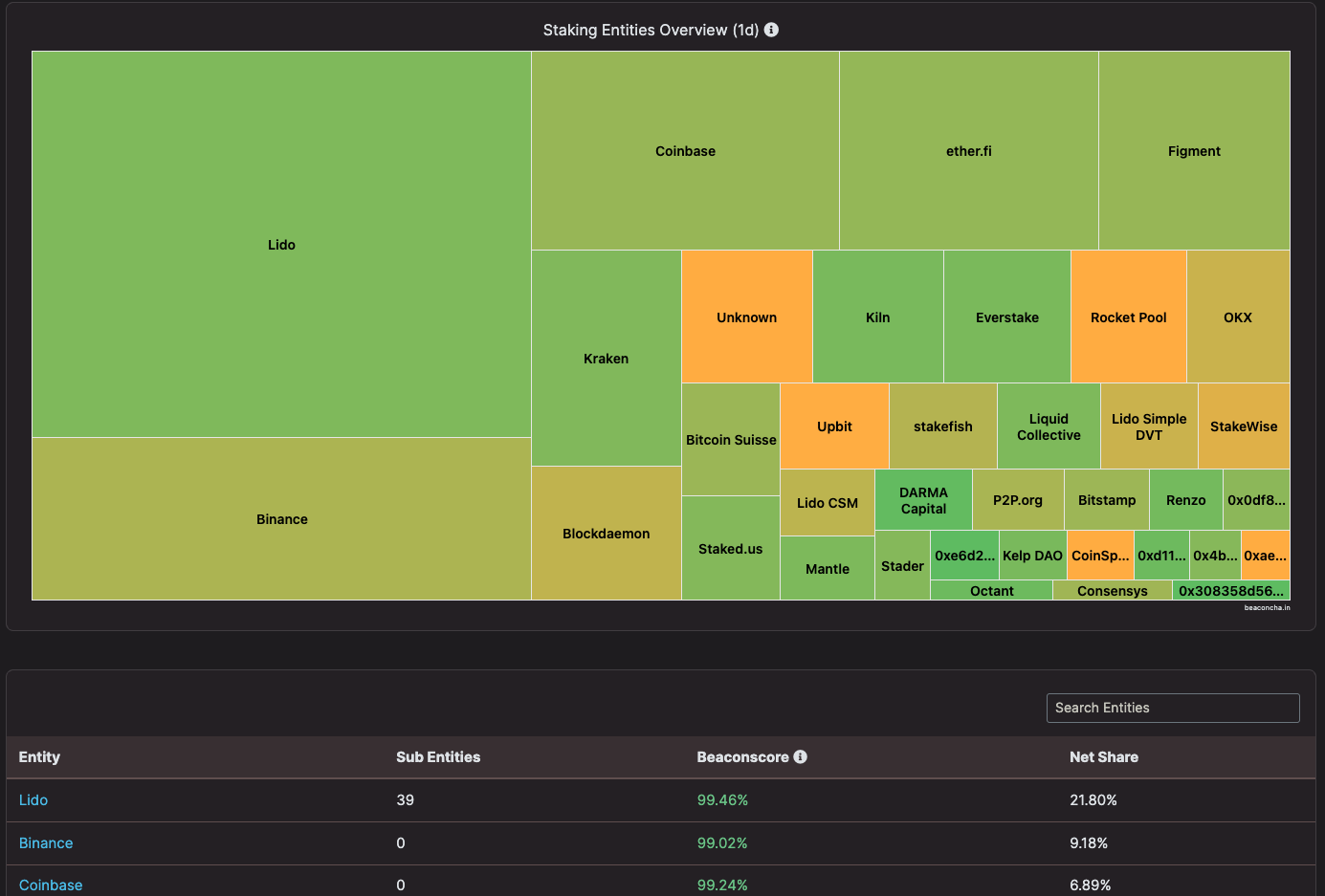
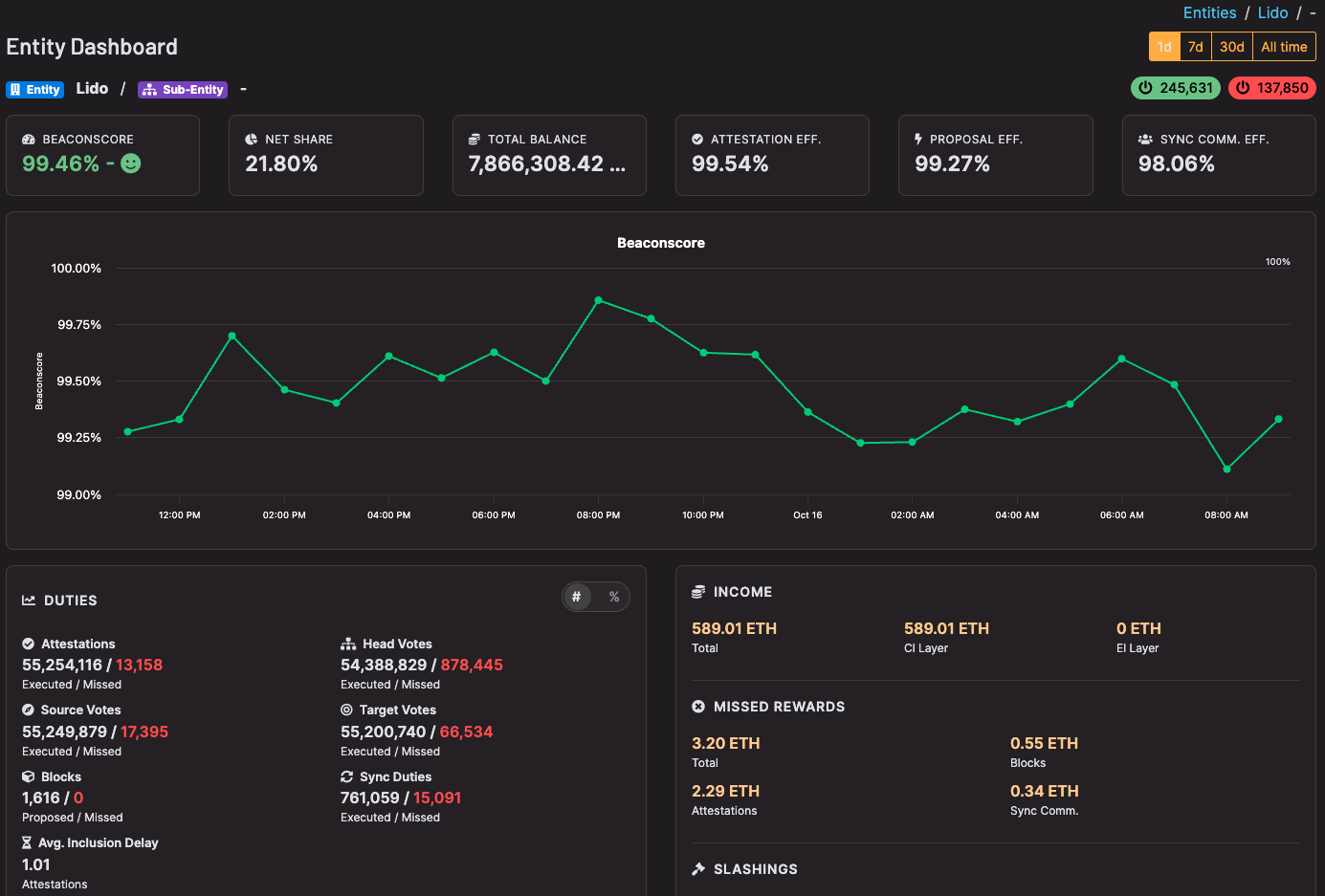
- Search for staking entities and their operators — The search bar now finds staking entities and their operators by name, so you can go straight to one instead of looking it up in the Entities table. They appear in their own Staking Entities and Staking Sub-Entities groups, each with the entity’s logo, and a filter chip shows only those. A search also no longer waits on its slowest part: every kind of result now has its own time limit, so a slow one is left out rather than holding up everything else.
- Table headers no longer cover the search results — On the address and token pages, the column headers of the tables stayed on top of the search dialog when you searched from those pages, hiding the first results behind them. They now stay within their own table.
- MEV timing colours now agree with the label beside them — On Entities, the MEV timing map coloured every operator on a single scale that ran across all three timing categories, so an operator close to a category boundary took the neighbouring category’s colour — one labelled “Timing Games” could be drawn in the red of the aggressive band. Each category now has its own colour range, so a tile’s colour always matches its label, and the map reads the same way as the BeaconScore® map beside it.
26.33
Release 26.33: Machine Monitoring on the Web
- Your machines on the website — Machine and client metrics were only visible in the mobile app. The new Machines page, in the Monitoring menu, charts cpu, memory, disk, disk i/o, network, libp2p traffic, peers and validators for each of your machines, grouped into a card per domain. An online/offline dot beside every machine shows at a glance which one stopped reporting. Time windows run from 1 hour to 30 days, with 3 hours on the free plan.
- Machine alerts, on the web for the first time — Alerts for an offline machine and for cpu, memory and storage usage can now be configured in the notification centre’s Machines tab, either for every machine at once or per machine. Until now they could not be set anywhere on the website. Machines that have no alerts of their own are named rather than left to look covered.
- Every consolidation your validators took part in — The new validator queue consolidation details endpoint lists each consolidation request your validators are involved in, as the source whose balance is merged away or as the target that receives it, back to the Pectra fork. Every entry carries its status: waiting in the execution-layer contract, queued with an estimated processing time, completed with the amount moved, or rejected with the reason. Filter by status, or by role to list every validator ever merged into one target. A selection of up to 50,000 validators is supported for now.
- Switches to compounding withdrawal credentials — The new validator queue compounding switch details endpoint lists the requests that raise a validator’s limit from 32 to 2048 ETH, each with its status. The consensus layer reports these through the same contract as consolidations, so a rejected switch is easy to mistake for a failed consolidation; this endpoint returns them as the switches they are.
- MEV timing across the whole network, not just its middle — The network timing chart on MEV plotted a single line, the daily median. The largest staking pools win most slots and propose promptly, so that line barely moves and tells you nothing about what the rest of the network does. The card now shows the spread instead: the middle half of proposals as a shaded band, with the promptest tenth and the slowest tenth as their own lines, and every value in the tooltip. A short explainer says what to watch — the gap between the outer lines, which is how far apart operators behave.
26.32
Release 26.32: Custom Time Ranges & Pectra Execution Requests
- What it costs to submit a withdrawal or consolidation right now — The new current request fee endpoint reports the fee each request contract demands at this moment, so you can decide whether to submit now or wait. The fee is not readable from a block explorer, and underpaying makes your own submission fail.
- Request fee history — The new request fees endpoint reports the lowest and highest fee seen per block for withdrawal and consolidation requests, over any time range.
- Consolidations in a slot — The new slot consolidations endpoint lists the consolidation requests a slot’s block carried, covering both consolidations between validators and switches to compounding withdrawal credentials, each with its status and rejection reason.
- Custom time ranges for aggregated data — Network performance, validator performance and validator rewards accept arbitrary time ranges by Unix timestamp, epoch, or slot, on Scale and Enterprise plans. Ranges are returned in whole UTC days, and each response reports the range it actually covers.
- Staking returns on the entity pages — Entities gains a sortable APR column, and each entity’s own page now leads with APR and the period ROI instead of a plain income figure. The earned-rewards box gains the missing execution (MEV + tips) row, and both boxes close with their APR and ROI. The figures come from the same data as the validator APY/ROI endpoint, so the explorer and the API agree.
- Each operator’s APR in the sub-entities table — An entity’s sub-entities table now shows the APR of every operator beside its BeaconScore® and net share, so you can compare returns without opening each one.
- Webhook and Discord notifications are delivered again — Webhook and Discord notifications were silently dropped for any period in which no user had turned the webhook channel off, which in practice meant most of them. They are now sent as configured.
- Time ranges starting before the chain existed — Endpoints that take a custom time range returned a negative slot and epoch when the range started before genesis, which their own contract does not allow. Such a range is now reported as starting at genesis (request fees and every other endpoint with a time range).
- Better activation estimates for pending validators — The dashboard estimated when a pending validator would activate using the queue rules that applied before Pectra, which no longer describe how a validator enters the chain. The estimate now follows the current rules, so a validator that already holds a registry entry is no longer told to wait behind the whole activation queue.
- MEV timing rejects a time range it cannot serve — Validator MEV timing accepted a time range, ignored it, and answered over the default 180-day window, so you could not tell that your range had no effect. Such a request is now rejected. The rolling 180-day window is still the only one available, and it stays the default when you omit the range.
- Layout fix — The period badge in an entity page’s headline figures is no longer clipped on narrow screens.
26.31
Release 26.31: Unified Pricing & Subscriptions
- One pricing page — API and Monitoring plans now live together on pricing with a product switcher; the old API and Premium pricing links redirect there with the right product preselected.
- Your subscriptions in one place — A new Subscriptions page lists your API and Monitoring subscriptions with direct access to billing management.
- Accurate next-withdrawal estimates — Queued withdrawal requests are now included in the next-withdrawal estimate on validator pages and the dashboard, which previously showed a near-zero amount for a validator with a large request already queued.
- ETH.STORE® as a daily time series — The new ETH.STORE endpoint returns the network-wide daily staking yield as a paginated series with 7-day and 31-day moving averages.
- Adding exited validators to a dashboard works again — Adding validators by deposit address no longer fails outright when one of them has already exited, on the dashboard.
- Validator index on the deposits page — The deposits table now shows each deposit’s validator index, so you no longer have to open a deposit to find it.
- ether.fi in the staking services directory — Staking services now lists ether.fi alongside the other liquid-staking providers.
- Machine metrics API works again — The machine metrics endpoints returned an error instead of your monitoring data. They now serve it again, with correct “last seen” timestamps and correct ordering and paging for machines whose exporter reported time in milliseconds.
- Mobile fix — The landing page’s API cards no longer overflow the page padding on narrow screens.
26.30
Release 26.30: New API Endpoints & Income Report Fixes
- New API endpoints — Epoch overview, slot deposits, and validator lifecycle states are now available, alongside newly-published docs for the deposits and withdrawals endpoints.
- Income report accuracy — System deposits/withdrawals (protocol-internal balance movements) no longer count toward payouts or income, and networks with Electra active from genesis no longer double-count deposits, in the income report. Both CSV exports are now versioned so external tools can detect format changes.
- Validator data corrections — Fixed a cross-chain cache bug that could show one chain’s validator key on another chain’s same-numbered validator, corrected contract categorization on block overview/rewards/withdrawals pages, and fixed incorrect checkpoint reporting on the network state endpoint.
- Faster custom date-range queries — Rewards and network views over a custom date range load faster thanks to smarter query planning.
- Protocol-generated deposits are now typed
system— The deposit type previously returned asnetworkis nowsystem, matching the wording used for system deposits and withdrawals (slot deposits). - Correct sender on direct deposits — Deposits sent straight to the deposit contract now report the depositing address instead of an empty one (slot deposits).
- Queued deposits and withdrawals clarified — The deposit and withdrawal endpoints now explain that entries still waiting in the queue have no per-slot detail yet, and how to filter for the ones that do.
26.29
Release 26.29: Validator Page Refresh & MEV Guides
- Validator page refresh — Cleaner heading labels on validator pages, a new BeaconScore® percentile badge (“Top X%”), and — on mobile — the edit, follow, and API-links actions tucked into a single menu.
- One-click Income Report — A “Generate Income Report” button on the validator page takes you straight to a tax-grade income report pre-filled with that validator.
- MEV analysis guides — New how-to guides for MEV timing analysis: an introduction, plus walkthroughs for comparing timing across entities and investigating a block.
- Dashboard updates instantly — The validator summary now refreshes right after you add or remove validators, instead of showing stale rows for up to ~15 seconds; the add-validator search also accepts a trailing comma.
- Faster slot pages — Slot pages load noticeably faster, and the Transactions tab on busy blocks now loads in pages instead of resolving every transaction up front.
- Mobile fixes — Recent-slots cards no longer overlap on the landing page, and the Expert-mode Daily Income chart legend no longer swallows the plot on phones.
26.28
Release 26.28: Validator Income & Tax Report
- Validator income & tax report — New income report with time-weighted APR and a tax-grade CSV export of your validators’ rewards, priced in your fiat currency; non-premium users can explore a demo with sample data.
- Redesigned Daily Income chart — The validator page’s Daily Income chart is rebuilt with Simple, Advanced, and Expert detail levels, a per-component reward breakdown, clearer missed-reward bands, and an expandable full-history view — with the header income figures and chart now guaranteed to agree.
- Explorer menu refined — The Explorer menu’s Network Overview now has labelled Chain and Validators sections, and Relays and Entities join the Staking Hub.
26.27
Release 26.27: MEV Timing API, Navigation & Explorer Redesign
- MEV timing games API — Five new endpoints expose relay bid ladders and timing-game outcomes for blocks, entities, validators, and the whole network (docs), now linked from the API pill on every page that shows the same data.
- Redesigned navigation — New mega menus with gateway cards and a restructured Explorer menu (Staking Hub, Network Overview, Performance), plus a rebuilt mobile menu.
- Tools Hub — A new tools gateway page presenting every explorer tool in one place, with a spotlight carousel.
- Explorer landing page redesign — The explorer landing page is rebuilt on the new design system, with reworked slot and epoch cards, a validator-status breakdown, and network-vitals tiles.
- System deposits & withdrawals — New explainer covering protocol-internal balance movements that are re-queued as pending deposits.
- MEV timing accuracy — On the entities pages, a day that has not finished aggregating now shows an “Unknown” badge instead of a misleading “No MEV”.
- Entity & MEV polish — Touch-device treemap tooltips with a working “View details” link, plus mobile tab cutoff, card alignment, a colored MEV median with vs-average delta, and MEV sub-tab deep-linking on validator pages.
- Withdrawal & consolidation status — On the dashboard, completed execution-layer withdrawal and consolidation requests now show the correct processed status instead of staying stuck on “queued”.
26.26
Release 26.26: Large-Dashboard Fixes
- Large dashboards: Blocks tab — The dashboard Blocks tab now loads for very large dashboards (tens of thousands of validators) that previously timed out.
- Large dashboards: MEV tab — The dashboard MEV tab now loads for very large dashboards instead of failing.
- Entities treemap consistency — The entities treemap now shows the same BeaconScore® as the matching entity detail page.
26.25
Release 26.25: MEV Timing Games & Entities Redesign
- MEV timing games — New MEV analysis with heatmap, treemap, and bar charts, plus MEV insights on slot, validator, and entity pages and a dashboard MEV tab.
- Entities redesign — Rebuilt entities hub and detail pages with a period switcher, KPI trend chips, treemap / BeaconScore® charts, and searchable tables.
- Validator queue accuracy — Balance-derived churn, correct live consolidation balance, and 0x01/0x02 address matching in the queue API.
- Staking queue guides — New queue-tracking guides for wait times and staking flows; the v2.1 schema is now the default (legacy deprecated, sunset 2026-07-02).
- Validators sorting — Restored column sorting on the validators overview.
- Top-up deposit clarity — Top-up deposits now show a “Top-up” badge instead of confusing all-zero values on the deposits page.
- Consolidation vs. exit queues — The validator queues page now separates consolidation sources from voluntary exits.
26.24
Release 26.24: New Clients, GasNow Fix, Withdrawal Epoch
- ethrex & Grandine — Two new Ethereum clients (ethrex execution layer, Grandine consensus layer) are now tracked in the clients overview and available for update notifications.
- GasNow decimal precision — Gas price tiers now show 3-decimal precision. Previously any value below 1 gwei showed ”< 1 GWei” on all four tiers; you can now see actual values like “0.042 Gwei”.
- Validator withdrawal epoch — The lifecycle timeline now shows the withdrawal epoch on the “Withdrawn” step — estimated for validators still in the sweep queue, confirmed once fully withdrawn.
- Withdrawal slots API — New endpoint returns all slots in which a validator received a withdrawal sweep payment.
- Currency switch fix — Switching the display currency now immediately reloads server-rendered values (balances, income cards, charts, tables). Previously required a manual page refresh.
- Consolidation banner accuracy — The “Consolidation in progress” banner no longer shows for validators with rejected consolidations, and no longer renders twice.
26.23
Release 26.23: Reward Accuracy & Bug Fixes
- Slots reward accuracy — The burned base fee is now correctly subtracted from EL proposer rewards for non-MEV blocks on the slots list. Values were previously overstated by baseFee × gasUsed.
- Exit queue 404 fixed — An empty validator exit queue no longer returns a 404 error.
- Exit queue estimate accuracy — Estimated withdrawal queue epochs are accurate again (were up to ~11.6 hours too early due to a missing MAX() aggregate).
- Mobile pricing table — Row backgrounds now paint across all columns when scrolling horizontally on mobile.
26.22
Release 26.22: Slots Reward Bars, Validator Lifecycle, Bug Fixes
- Slots: EL/CL reward bars — The slots list shows inline bar charts for Execution Layer (priority fees / MEV) and Consensus Layer proposer rewards, normalised per page. The activity column is compacted with icon + count pairs.
- Validator lifecycle — The lifecycle timeline gains a Withdrawn step. “Consolidation in progress” now surfaces in the overview card and is suppressed when the latest request is rejected. EL consolidation, withdrawal, and exit tables show a Status column with consensus-layer rejection reasons.
- Post-Pectra deposits — Post-Pectra CL deposit events are now included on validator and address pages, so deposits submitted after Pectra are no longer missing.
- Cookie consent unified — A single consent choice now covers both v1 and v2 pages.
- Bug fixes — Withdrawals chart values corrected (was 10⁹ too small), non-default currency on withdrawals page fixed, contact form 404 resolved, and more.
26.21
Release 26.21: Gas Price, Validator Self-Reporting, UI Polish
- Validator chart deep links — Sub-tabs on validator pages (#income, #proposals, #beaconscore) are now bookmarkable URLs that update as you navigate.
- Validator self-reporting — Validators can now claim their entity tag directly via the API, making it easier for staking operators to associate validators with their organisation.
- Mobile slot visualization — Slot category icons now render correctly on mobile without needing to open the filter panel first.
- CL reward pending status — Slot and block pages now show “Pending (waiting for epoch finality)” instead of a blank dash for proposer rewards that haven’t been processed yet.
- Withdrawal sweep timestamps — Corrected the staking queue estimation timestamps (slot time was being computed as epoch time, inflating values by 32×).
- Copy & UI polish — 13 text and copy fixes across the site (EIP-1559, Rocket Pool, footer, and more), BeaconScore® button spacing fixed, card rounded corners no longer clipped.
26.20
Release 26.20: TOTP 2FA, Consolidations UI, Entity Selector
- TOTP two-factor authentication — Secure your account with a TOTP authenticator app (Google Authenticator, Authy, etc.). Enable it from user settings.
- Consolidations UI — Ethereum Pectra consolidation requests are now visible in the explorer. Track on-chain consolidations from the Eth1 address page.
- Entity selector live — The entity selector API is fully deployed. The “Coming Soon” label is gone.
26.19
Release 26.19: Page Search, Validator EL/CL Rewards, BeaconScore® Simulator Fix
- Cmd+K page search — The search dialog now surfaces internal pages alongside chain entities. Find any page — dashboard, explorer, API docs, settings — instantly.
- EL/CL reward split — Proposer rewards on slot and block pages are now broken out into Execution Layer and Consensus Layer components. Relay-built blocks show a MEV badge with the MEV recipient. The validator history table gains duty icons for attestation, proposal, and sync duties.
- BeaconScore® simulator — The simulator math now matches the API’s reward identity with correct Altair weighting and realistic defaults. Sliders extend to 0–100 % with a red-zone gradient on the track.
- Machine Metrics API (POST) —
POST /api/v1/client/metricsis now fully documented in the API docs sidebar with all three process variants.
26.18
Release 26.18: Machine Metrics API Docs, UI Fixes
- Machine Metrics API is now fully documented at docs.beaconcha.in — endpoints, cursor pagination, and example responses.
- Tab navigation no longer scrolls the page when switching between tab panels.
- Cookie banner button layout is fixed for mobile screens.
- Maximum stake exceeded banner is now correctly centered.
26.17
Release 26.17: BeaconScore® Hub, Pubkey Prefix Search, Machine Metrics API

- BeaconScore® now has a dedicated landing page covering methodology, leaderboard, simulator, and comparison.
- Pubkey prefix search lets you find validators by the first few hex characters (up to 10 matches).
- Machine Metrics API adds two new endpoints with cursor pagination to pull your own node, system, and validator metrics — making it easier to correlate hardware issues with on-chain events like missed blocks or finality drops.
- Themed scrollbars — thin theme-aware scroll bars with scroll shadows.
Free API Tier Replaced with a 30-Day Trial
The free API tier is being replaced with a 30-day full-access trial. Existing free API keys will stop working on Tue May 26, 2026 at 13:00 GMT+0200.The trial gives you full access for 30 days with no automatic upgrade to a paid plan after the trial ends.Existing free users should migrate before the cutoff at beaconcha.in/api/pricing.V1 → V2 API Migration Guide
Still on our V1 API? V2 is worth the switch:- All new features ship on V2 only.
- Query by index, pubkey, deposit address, withdrawal address, entity, or dashboard.
- Cursor-based pagination for cleaner data flows.
v26.10.6
Website Redesign and Navigation Update
We redesigned the website and reorganized the main navigation around a search-first landing page and four primary sections: API, Monitoring, Explorer, and Resources.The new landing page puts search first so you can find chain entities faster, while still giving you a quick overview of our core products at beaconcha.in.Technical endpoints and documentation now live under the API menu. Dashboards and notification settings are grouped under Monitoring. Chain data such as epochs, validators, slots, and blocks now sits under the Explorer menu, while tools like GasNow have moved under Resources.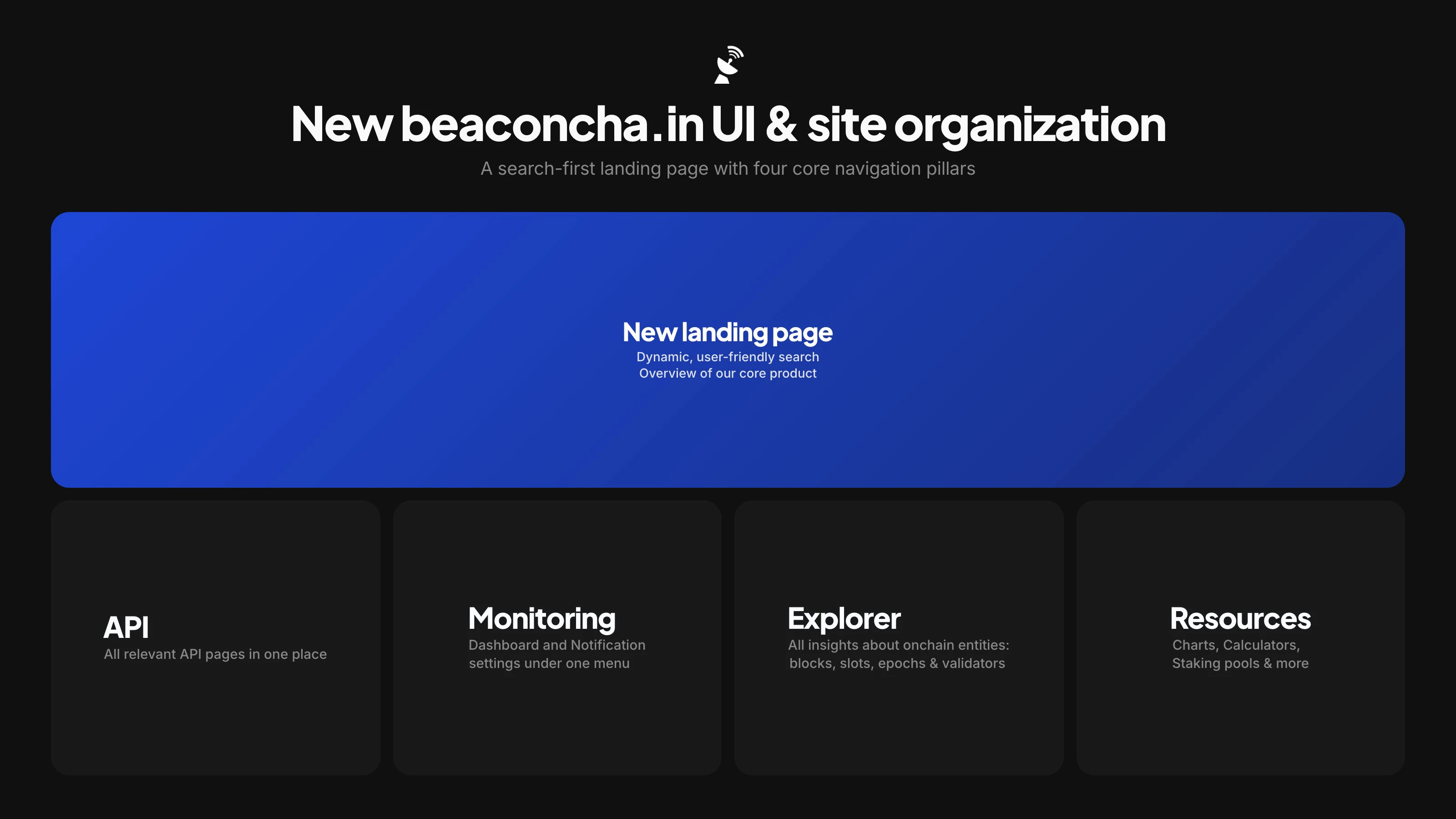
v26.8.3
New v2 API Endpoints for Network and Validator Insights
We added new v2 API endpoints focused on three areas: Entity Performance, Network Insights, and Validator Duty History.These updates make it easier to monitor staking entities, query network-level data for blocks, slots, sync committees, and validator metadata, and review validator duty history across attestations, proposals, and sync committees.Explore the updated API documentation at docs.beaconcha.in.
v25.50.11
Introducing new API Key Management
Now you can generate & manage keys directly in our new api key management page.Increased key limits based on your subscription plan.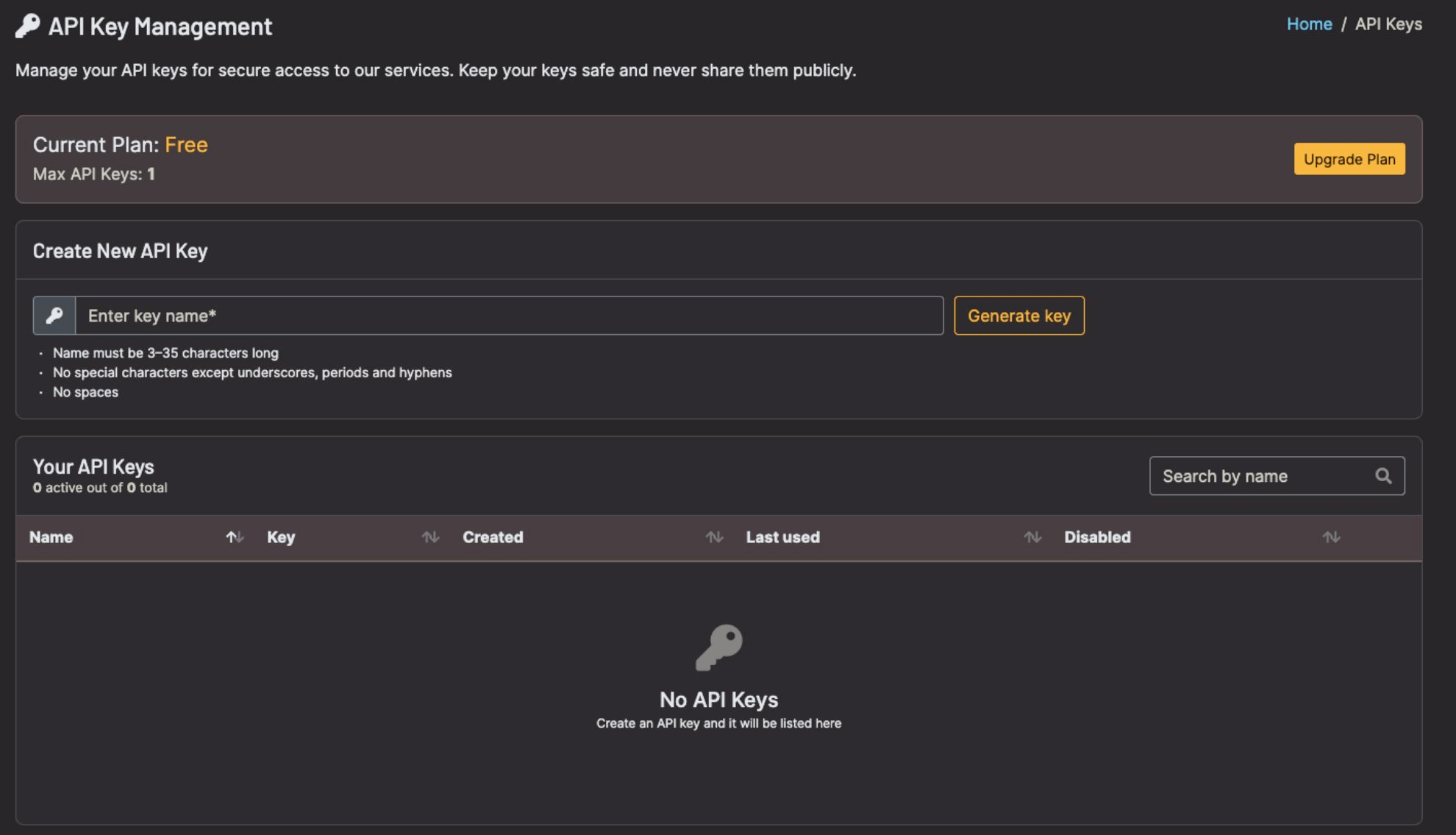
v25.50.10
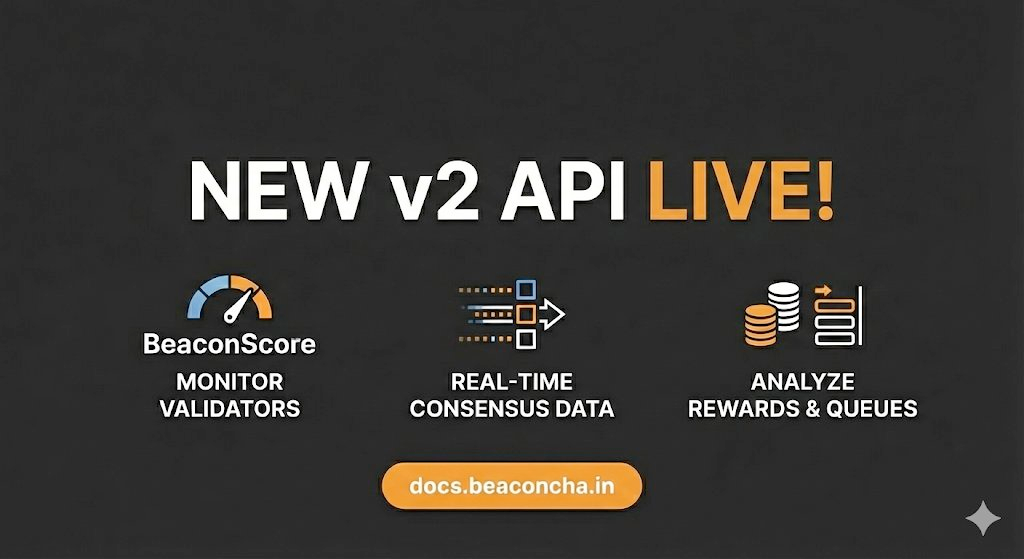
Our new v2 API is live!
You can now:- Monitor your validators’ performance with BeaconScore®
- Access consensus layer data in real-time
- Analyze validator rewards and queues
-
Free tier users have access to v1 & v2 API with a rate limit of 1K/per month
v25.49.3
Validator Queue Dashboard
We’ve added a new Validator Queue Dashboard that gives you real-time visibility into Ethereum’s validator queues.Track the Deposit, Consolidation, and Withdrawal queues — each showing the number of pending requests, total queued ETH, estimated wait time, churn limit per epoch, and a 30-day historical trend chart.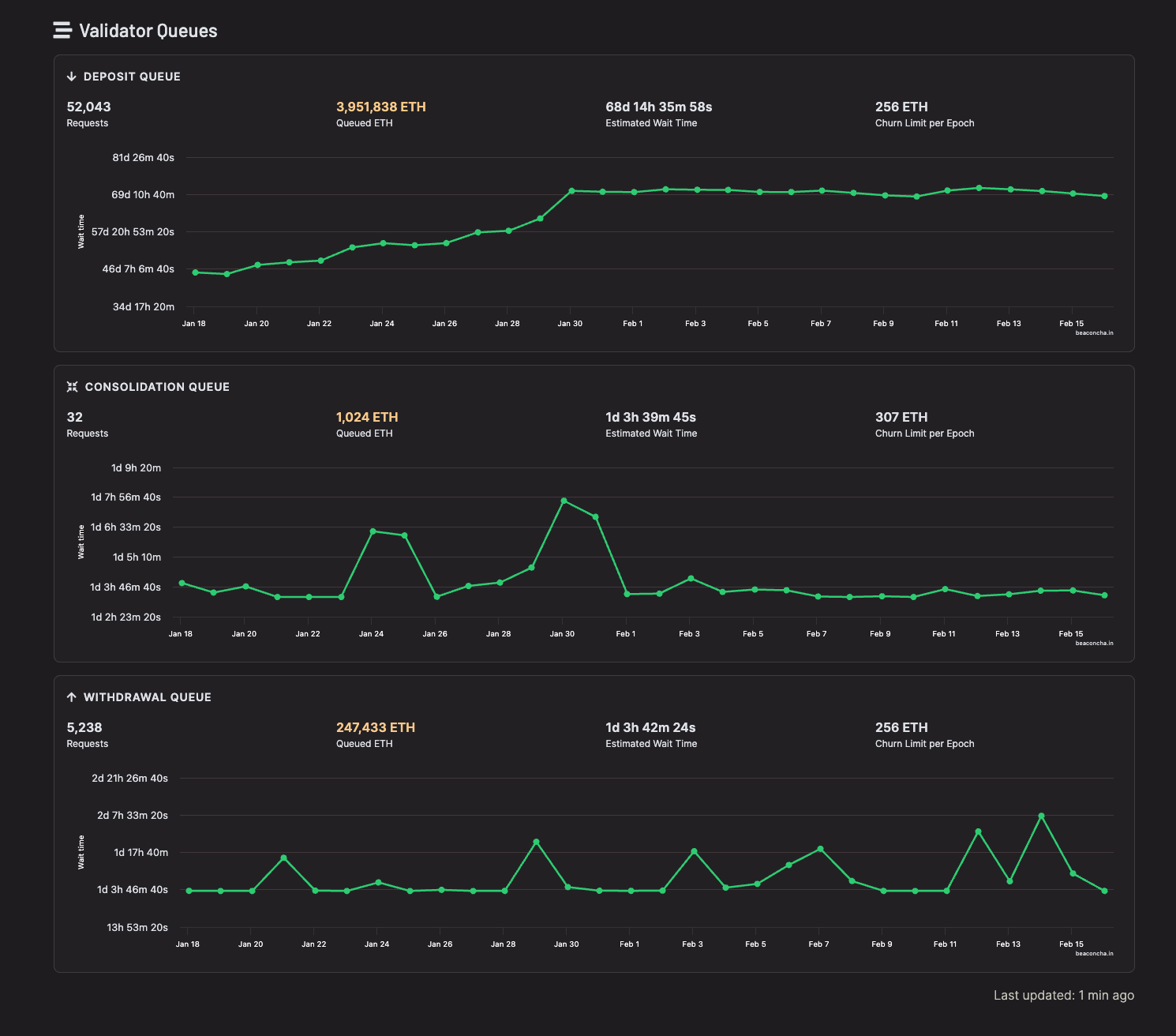
v25.44.0
API Docs
We made improvements to help you understand and use the API to the fullest. Find them in our docs portal.You can now access the API quickly from the updated homepage banner or from the new dropdown menu.
25.43.0
BeaconScore® + Entity Dashboards
We’ve just rolled out a set of updates on beaconcha.in:We’ve rebranded our validator efficiency metric to BeaconScore® — same reliable calculation, now with a clearer name. Learn how it works hereA new Entities Page : A high-level view of major staking providers, showing net validator share and BeaconScore® — all in one interactive visualization. Shout out to to Hildoby for providing the data.